Mango Sticky Rice
Mango Sticky Rice is a delightful dessert that hails from Southeast Asia, specifically Thailand. With its creamy coconut milk and perfectly cooked sticky rice paired with the sweet, ripe mango, it creates a harmony of flavors and textures that is simply irresistible. Whether you’re enjoying it at a street vendor in Bangkok or making it in the comfort of your kitchen, this dish offers a taste of tropical paradise.
What makes Mango Sticky Rice truly special is its simplicity and the ability to highlight the natural sweetness of the mango. It’s a dessert that pleases both the eyes and the palate, and it’s incredibly easy to whip up with just a few ingredients. So, let’s dive into the world of Mango Sticky Rice and learn how to create this luscious dessert!
Top Reasons to Make Mango Sticky Rice
- Quick and Easy: With just a handful of ingredients, you can create a stunning dessert in no time.
- Versatile: Perfect for any occasion, whether it’s a casual family dinner or a festive gathering.
- Healthy Ingredients: This dish features naturally sweet mangoes and coconut milk, making it a wholesome treat.
- Gluten-Free: A delicious option for those with gluten sensitivities.
- Impressive Presentation: The vibrant colors and elegant presentation make it a showstopper!
The Essentials
- 2 cups sushi rice or sticky rice: This is the base of your dessert, providing that signature chewy texture.
- 2 (13.66-ounce) cans coconut milk, full fat: Rich and creamy, it adds lusciousness to the dish.
- 1 cup granulated sugar: Sweetens the coconut milk; you can adjust to taste.
- 1 pinch salt: Enhances the flavors of the coconut and the rice.
- 3 ripe mangoes, sliced thin: The star of the dish, providing freshness and natural sweetness.
- 1 teaspoon toasted or black sesame seeds, optional: For a delightful garnish that adds a nutty flavor.
Toolbox for This Recipe
- Rice Cooker or Pot: For cooking the sticky rice to perfection.
- Mixing Bowl: For combining the coconut milk and sugar.
- Measuring Cups: To ensure accurate measurements for the ingredients.
- Serving Dish: For an attractive presentation of your Mango Sticky Rice.
Cooking Mango Sticky Rice: The Process
Step 1: Rinse the Rice
Begin by rinsing the sushi rice under cold water until the water runs clear. This process removes excess starch and helps achieve that perfect sticky texture.
Step 2: Soak the Rice
Soak the rinsed rice in water for at least 30 minutes. This step is crucial as it allows the grains to absorb water and cook evenly.
Step 3: Cook the Rice
Drain the soaked rice and place it in a rice cooker or a pot. Add 2 cups of water and cook according to your rice cooker instructions, or bring to a boil on the stovetop, then reduce to low heat, cover, and simmer for about 15-20 minutes until the rice is tender.
Step 4: Prepare the Coconut Sauce
While the rice is cooking, combine the coconut milk, granulated sugar, and a pinch of salt in a saucepan. Heat over medium-low heat, stirring until the sugar is dissolved. Do not bring it to a boil; just warm it through.
Step 5: Mix Rice and Coconut Sauce
Once the rice is cooked, transfer it to a mixing bowl. Pour the warm coconut sauce over the rice and gently fold it in. Allow it to sit for about 20-30 minutes to absorb the flavors.
Step 6: Slice the Mangoes
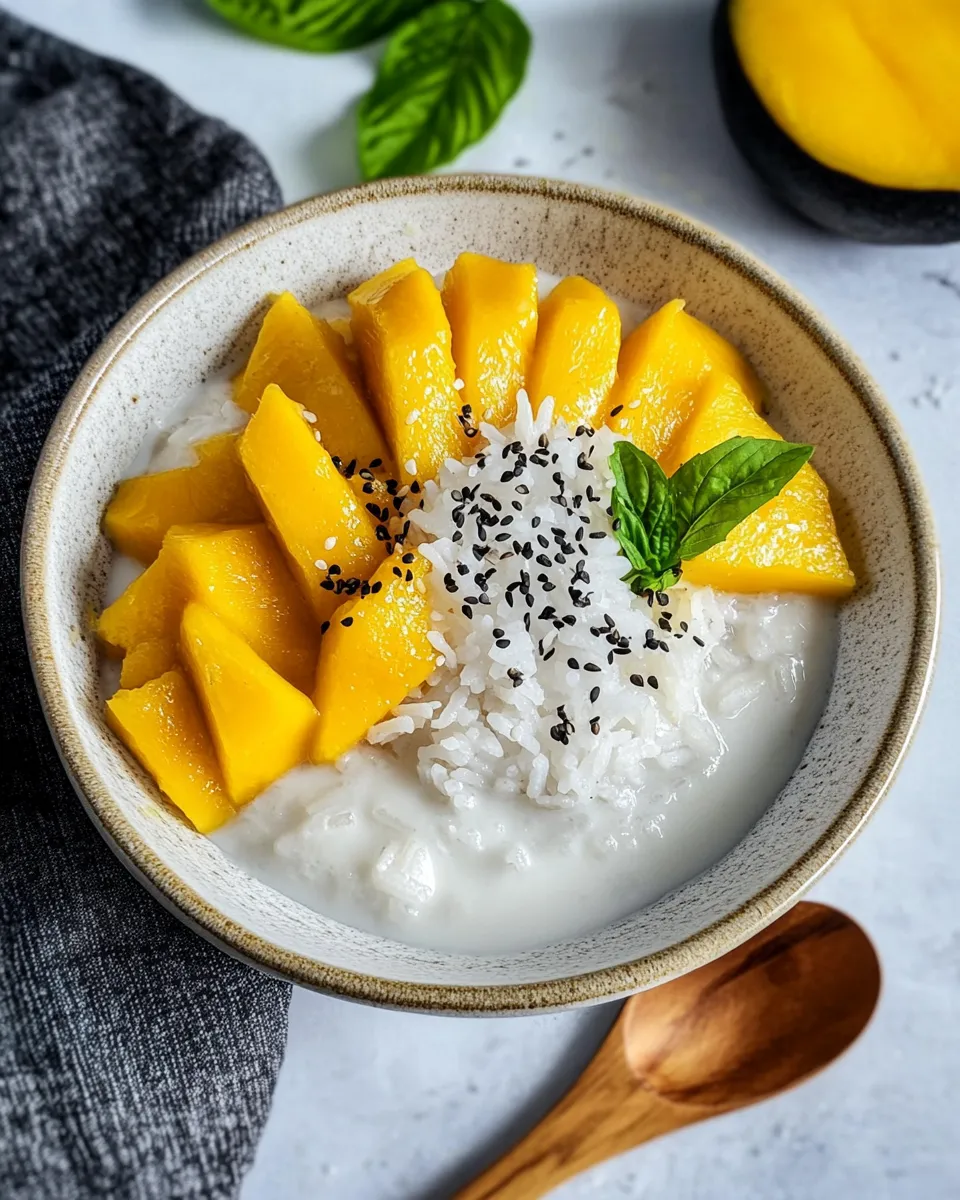
While the rice is resting, peel and slice the mangoes thinly, creating a beautiful fan shape for presentation.
Step 7: Serve
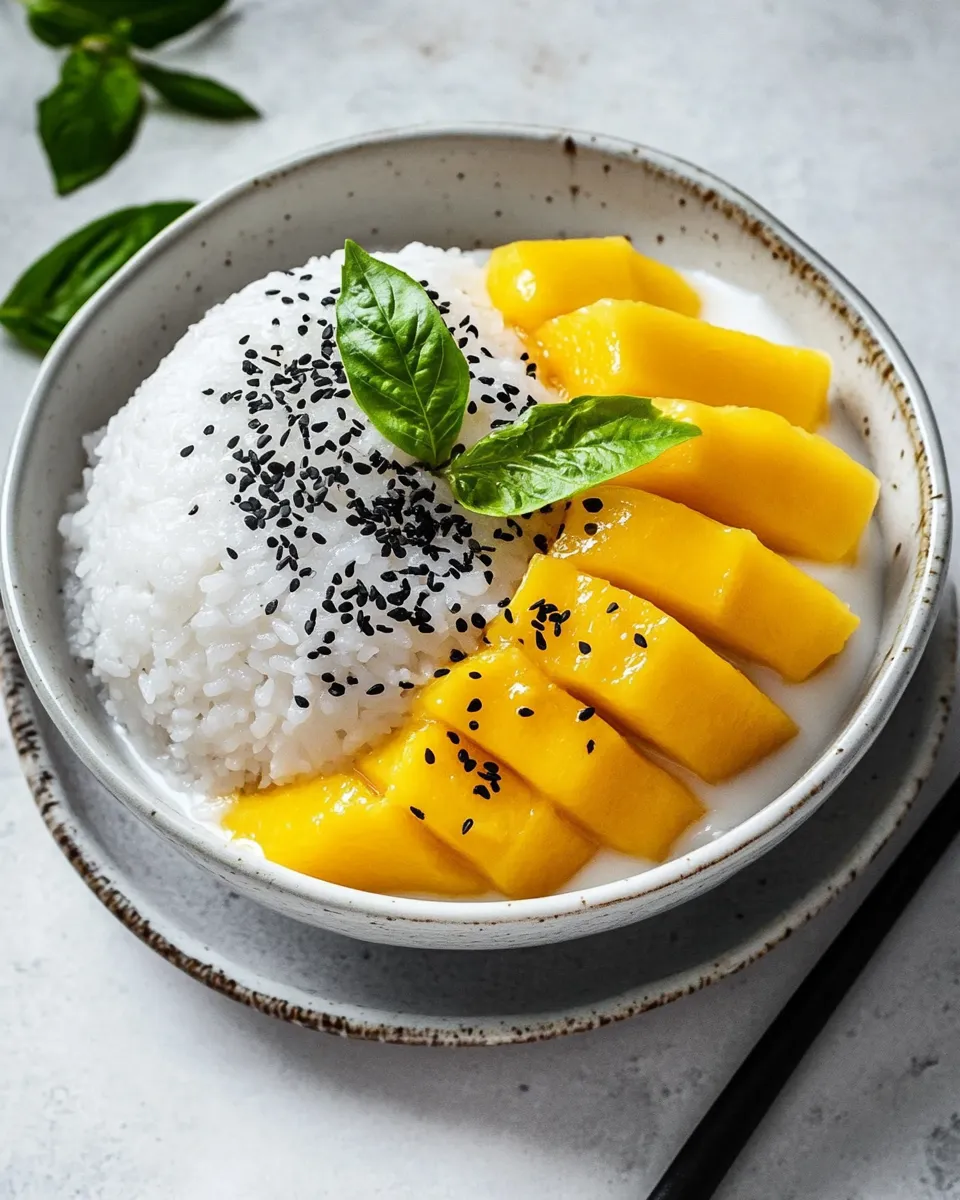
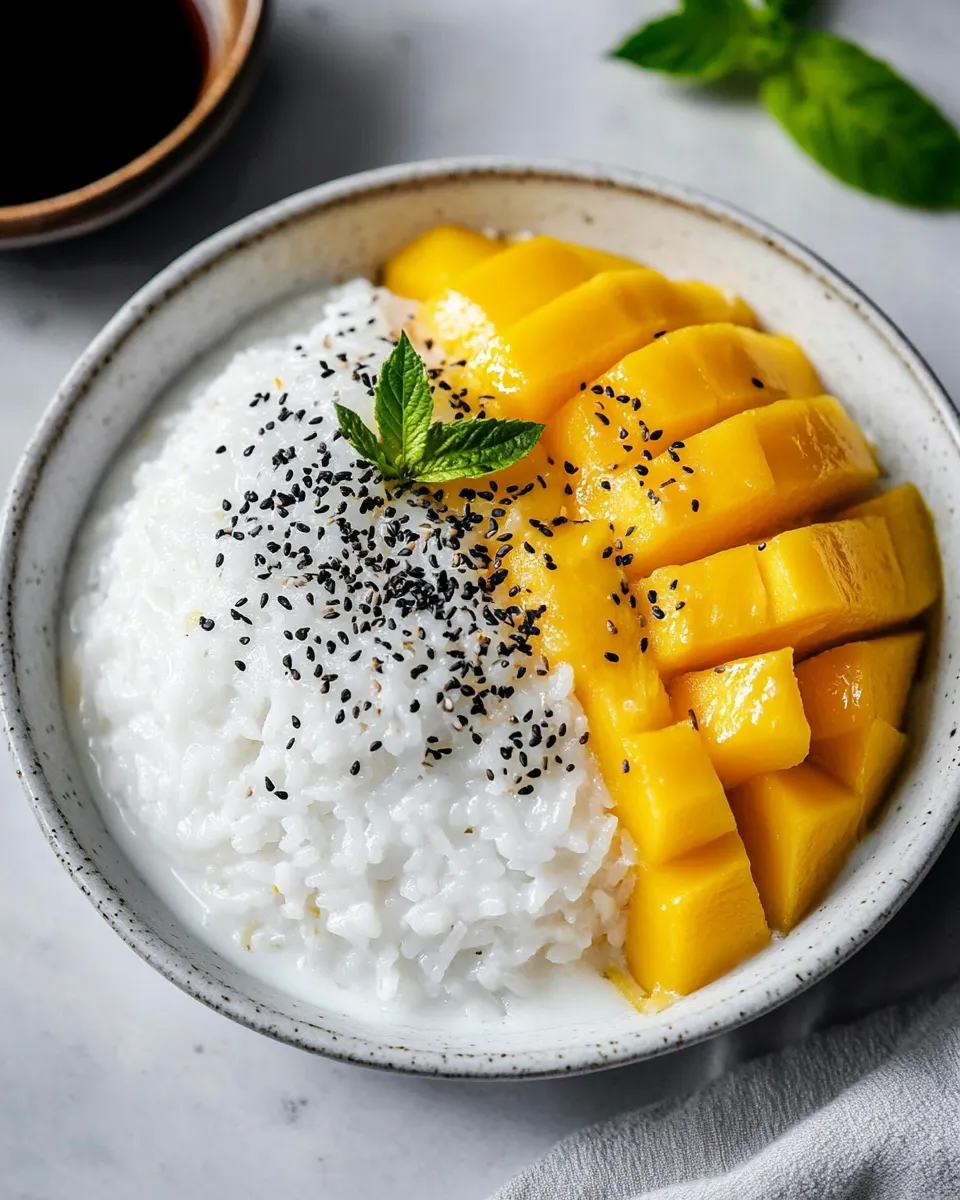
To serve, scoop a generous portion of the sticky rice onto a plate, artfully arrange the mango slices alongside, and drizzle with any remaining coconut sauce. Finish with a sprinkle of toasted or black sesame seeds if desired.
Fit It to Your Goals
- For a lower sugar option, reduce the sugar in the coconut sauce to half a cup.
- For a vegan twist, ensure all ingredients are plant-based, which they typically are.
- Add more fruit for added nutrients and flavor; consider pairing with strawberries or lychees.
- Experiment with toppings like shredded coconut or chopped nuts for added texture.
Pitfalls & How to Prevent Them
Making Mango Sticky Rice is relatively straightforward, but a few common mistakes can occur:
- Overcooking the rice: Keep an eye on the cooking time to avoid mushy rice. Perfectly cooked sticky rice should be tender yet firm.
- Too much coconut milk: If you add too much coconut sauce, the dish can become overly rich. Adjust to your desired creaminess.
- Choosing unripe mangoes: Ensure your mangoes are ripe for the best flavor. Look for fruit that gives slightly when pressed.
Storing Tips & Timelines
Mango Sticky Rice is best enjoyed fresh, but if you have leftovers, here are some storage tips:
- Store leftover sticky rice in an airtight container in the refrigerator for up to 3 days.
- The coconut sauce can also be stored separately in the fridge for about 4 days.
- Do not freeze the dish, as the texture of the rice and mango will suffer once thawed.
Handy Q&A
Can I use a different type of rice?
While sushi rice or sticky rice is recommended for its texture, you can experiment with short-grain rice. However, it won’t have the same characteristic chewiness.
What can I substitute for coconut milk?
If you need a substitute, full-fat almond milk or another plant-based milk can work, but they will alter the flavor and creaminess of the dish.
Can I prepare this dish in advance?
While you can prepare the coconut sauce and sticky rice in advance, it’s best to slice the mango just before serving to ensure freshness.
What can I serve with Mango Sticky Rice?
This dessert pairs wonderfully with Thai iced tea or a refreshing coconut drink to complement its flavors.
Keep Cooking
- Sally’s Baking Addiction – For more dessert inspiration.
- Pinch of Yum – For delicious and easy recipes.
- Minimalist Baker – For simple, plant-based recipes with minimal ingredients.
Serve & Enjoy
Once your Mango Sticky Rice is ready, it’s time to enjoy this tropical delight! Whether you’re sharing it with friends or savoring it all by yourself, each bite will transport you to a sunny beach. The combination of sweet mango, creamy coconut, and chewy rice is nothing short of heavenly. So grab your favorite plate, serve it up, and indulge in this beautiful dessert that’s sure to impress.
Mango Sticky Rice is more than just a dish; it’s a culinary experience that encapsulates the essence of tropical flavors. It’s perfect for celebrations, gatherings, or simply as a sweet treat to brighten your day. So, gather your ingredients and get ready to create this stunning dessert that will leave everyone craving more. Happy cooking!
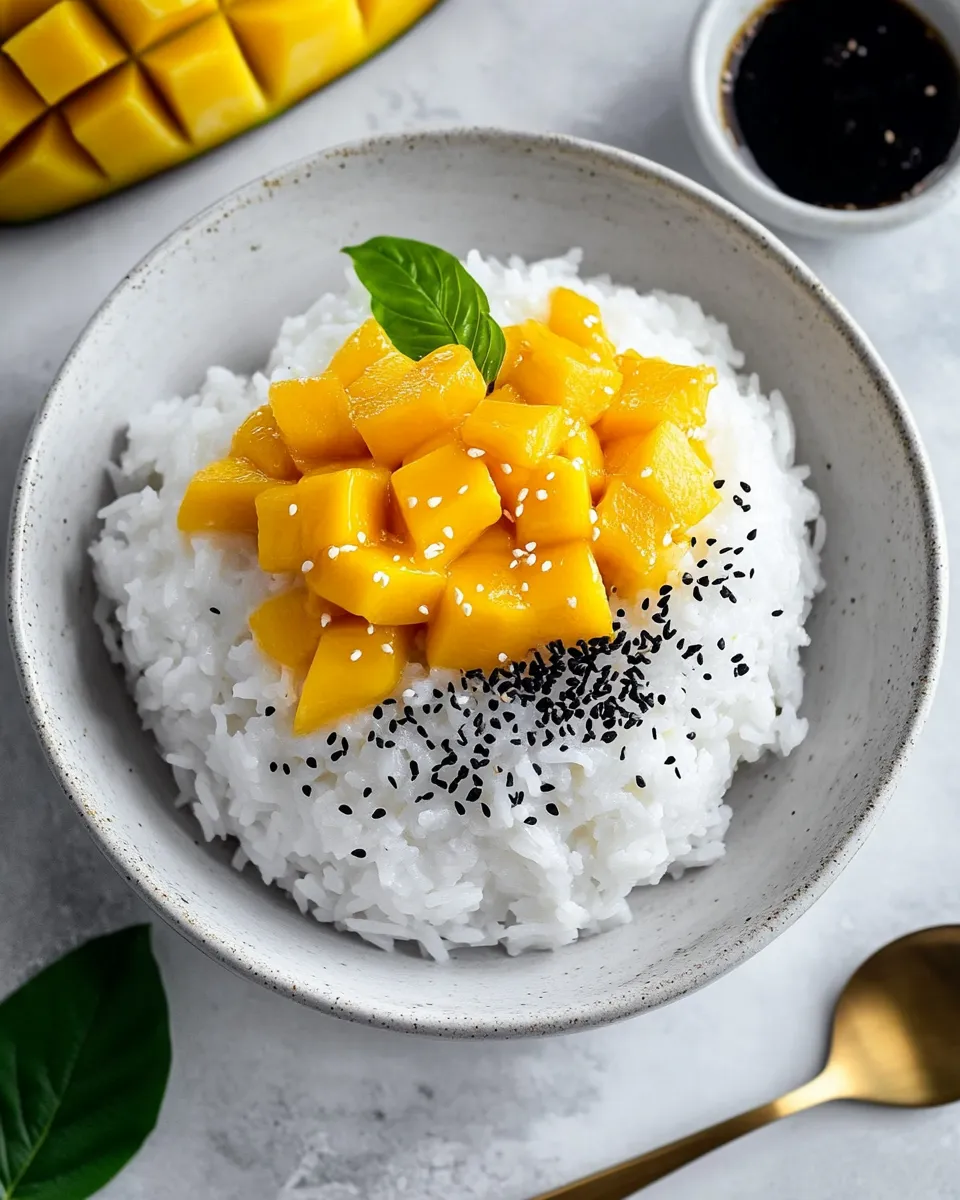
Mango Sticky Rice
Ingredients
Equipment
Method
- Step 1: Rinse the Rice - Begin by rinsing the sushi rice under cold water until the water runs clear. This process removes excess starch and helps achieve that perfect sticky texture.
- Step 2: Soak the Rice - Soak the rinsed rice in water for at least 30 minutes. This step is crucial as it allows the grains to absorb water and cook evenly.
- Step 3: Cook the Rice - Drain the soaked rice and place it in a rice cooker or a pot. Add 2 cups of water and cook according to your rice cooker instructions, or bring to a boil on the stovetop, then reduce to low heat, cover, and simmer for about 15-20 minutes until the rice is tender.
- Step 4: Prepare the Coconut Sauce - While the rice is cooking, combine the coconut milk, granulated sugar, and a pinch of salt in a saucepan. Heat over medium-low heat, stirring until the sugar is dissolved. Do not bring it to a boil; just warm it through.
- Step 5: Mix Rice and Coconut Sauce - Once the rice is cooked, transfer it to a mixing bowl. Pour the warm coconut sauce over the rice and gently fold it in. Allow it to sit for about 20-30 minutes to absorb the flavors.
- Step 6: Slice the Mangoes - While the rice is resting, peel and slice the mangoes thinly, creating a beautiful fan shape for presentation.
- Step 7: Serve - To serve, scoop a generous portion of the sticky rice onto a plate, artfully arrange the mango slices alongside, and drizzle with any remaining coconut sauce. Finish with a sprinkle of toasted or black sesame seeds if desired.
Notes
- For a lower sugar option, reduce the sugar in the coconut sauce to half a cup.
- Ensure all ingredients are plant-based for a vegan twist.
- Add more fruit like strawberries or lychees for extra flavor.
- Experiment with toppings like shredded coconut or chopped nuts.