Homemade Marinara Sauce
There’s nothing quite like a rich, flavorful marinara sauce to elevate your pasta dishes, pizzas, and more. Making your own homemade marinara sauce is easier than you might think, and the taste is incomparable to store-bought options. With simple ingredients and a bit of love, you’ll create a sauce that’s bursting with freshness and depth.
So, roll up your sleeves and let’s dive into the world of homemade marinara sauce.
What Makes This Recipe Special
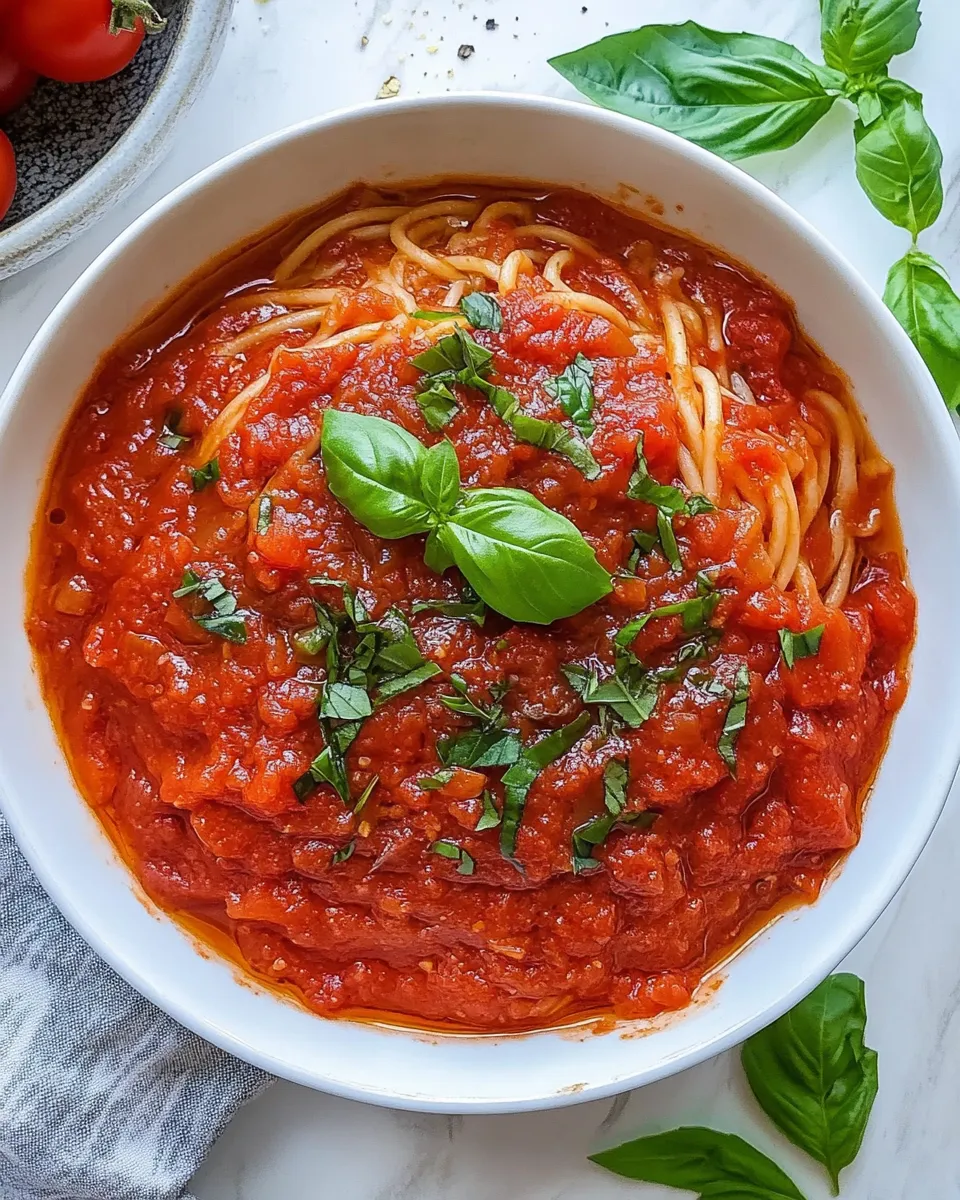
This homemade marinara sauce stands out for several reasons. First, we’re using San Marzano tomatoes, known for their natural sweetness and low acidity, which create a sauce that’s rich and balanced. The combination of butter and extra virgin olive oil adds a luxurious texture and depth of flavor that’s hard to resist. Additionally, the fresh basil and garlic make the sauce aromatic and vibrant, while the option of adjusting the garlic level allows you to customize it to your taste.
Your Shopping Guide
To make your homemade marinara sauce, here’s what you’ll need to grab from the store:
- 2 (28 oz) cans San Marzano tomatoes: The star of your sauce, these tomatoes bring unparalleled flavor.
- 3 tbsp butter: For a creamy richness that enhances the sauce.
- 1 1/2 cups finely chopped yellow onions: Adds sweetness and depth.
- 5 – 10 cloves garlic (minced): Adjust based on your preference for garlic.
- 1/4 cup extra virgin olive oil: A quality oil elevates the dish.
- 1/2 tsp salt: Enhances all the flavors; add more to taste.
- 4 sprigs (20g) fresh basil: Fresh herbs brighten the sauce.
- Shredded Parmesan or Romano cheese: For serving, adds a savory finish.
- Chopped basil: A fresh garnish to complete the dish.
Equipment at a Glance
To whip up this delicious sauce, you’ll need:
- Large pot or Dutch oven: For simmering the sauce.
- Wooden spoon: For stirring and combining ingredients.
- Sharp knife: For chopping the onions and garlic.
- Cutting board: A stable surface for your chopping.
- Measuring cups and spoons: To ensure accuracy in your measurements.
Homemade Marinara Sauce: From Prep to Plate
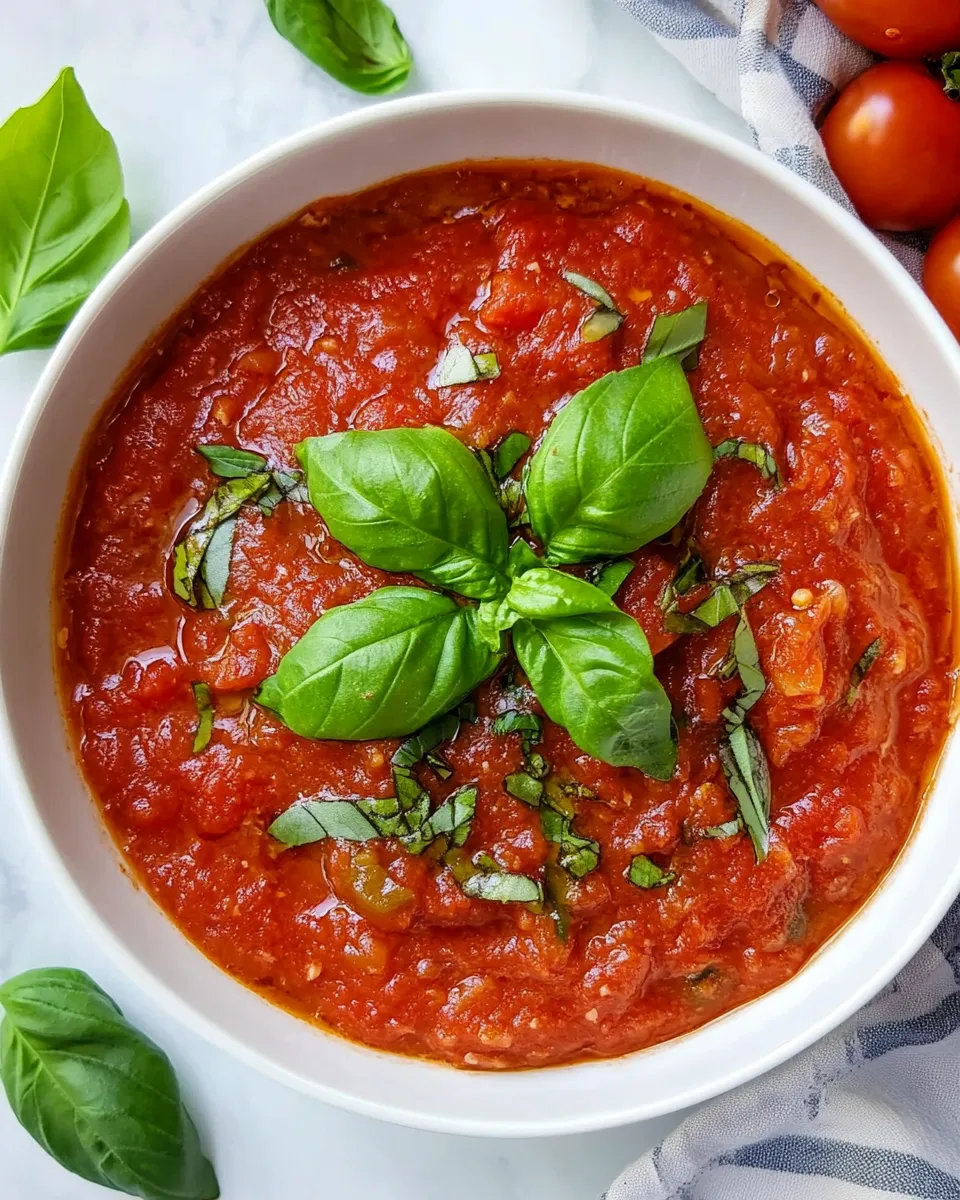
Now, let’s get into the heart of the matter. Follow these simple steps to create your homemade marinara sauce.
Step 1: Sauté the Aromatics
In your large pot or Dutch oven, heat the extra virgin olive oil over medium heat. Once hot, add the finely chopped yellow onions and sauté until they become translucent, about 5-7 minutes. Stir occasionally to prevent them from burning.
Step 2: Add the Garlic
Next, add the minced garlic to the pot. Cook for about 1-2 minutes until fragrant, but be careful not to let it burn, as burnt garlic can turn bitter.
Step 3: Incorporate the Tomatoes
Pour in the San Marzano tomatoes (including their juices) into the pot. Use a wooden spoon to break up the tomatoes a bit, releasing their delicious juices into the mix.
Step 4: Season the Sauce
Add the butter and salt to the pot. Stir everything together until the butter melts and is incorporated into the sauce.
Step 5: Simmer
Bring the sauce to a gentle simmer. Once simmering, add the fresh basil sprigs to the pot. Cover partially with a lid and let the sauce simmer for about 30-45 minutes, stirring occasionally. The longer you simmer, the more the flavors will deepen.
Step 6: Taste and Adjust
After simmering, taste the sauce and adjust the seasoning if needed. You might want to add more salt or even a pinch of sugar if the sauce is too acidic.
Step 7: Serve and Enjoy
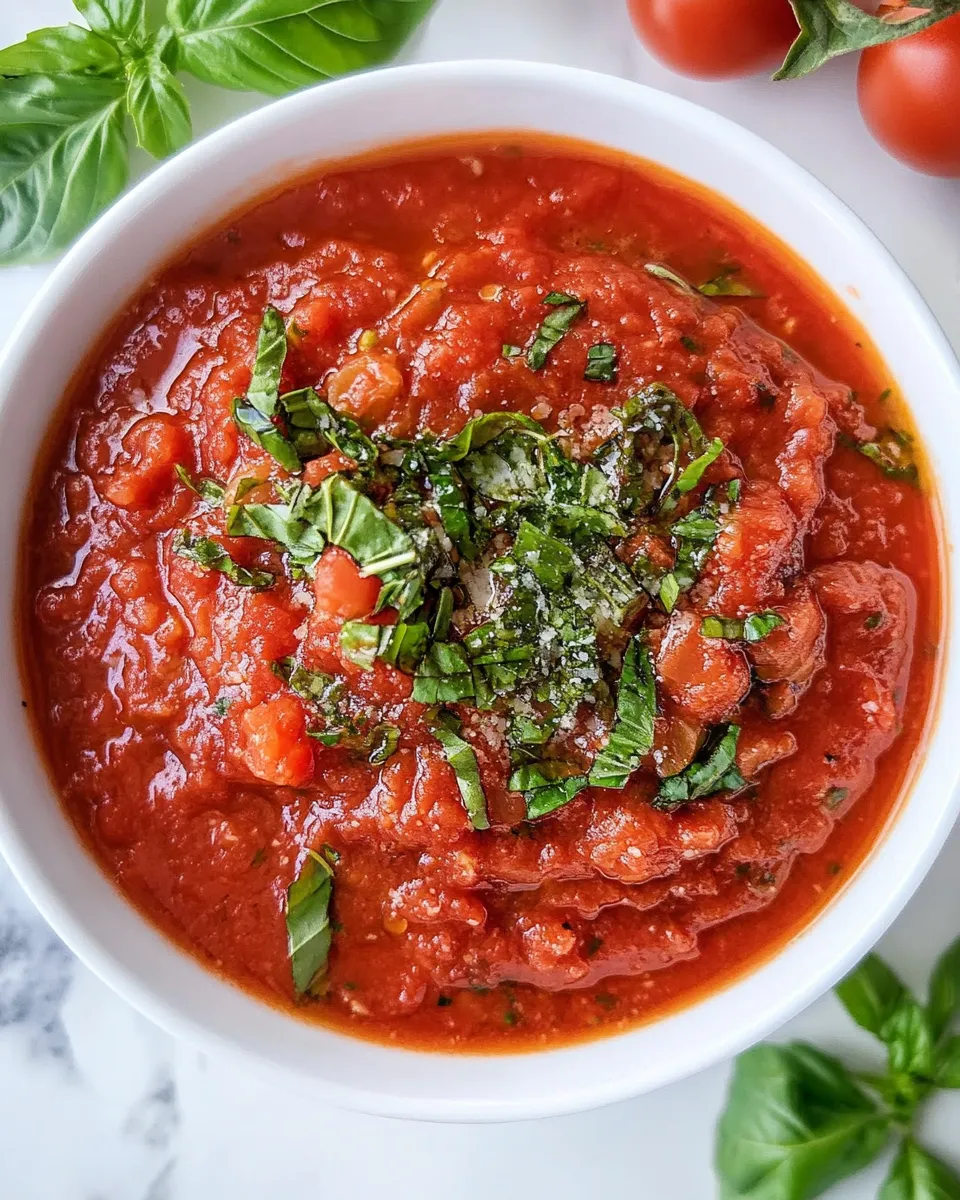
Once you’re satisfied with the flavor, remove the pot from heat. Discard the basil sprigs and serve the sauce warm over your favorite pasta. Top with shredded Parmesan or Romano cheese and a sprinkle of chopped basil for an extra burst of flavor.
Dietary Swaps & Alternatives
If you’re looking to modify this recipe for dietary preferences or restrictions, here are some ideas:
- Butter alternatives: Use vegan butter or olive oil for a dairy-free version.
- Onion-free version: Omit the onions and use more garlic for flavor.
- Fresh herbs: If basil isn’t available, try using dried oregano or parsley.
- Low-sodium option: Use low-sodium canned tomatoes and adjust salt to taste.
Behind-the-Scenes Notes
The beauty of homemade marinara sauce lies in its simplicity. This recipe is a canvas for your culinary creativity. Feel free to add red pepper flakes for a spicy kick or a splash of red wine for depth. If you love a chunky sauce, you can leave some larger tomato pieces intact for texture. This sauce also freezes beautifully, making it a practical choice for meal prep.
- Storage: Store leftovers in an airtight container in the refrigerator for up to 5 days.
- Freezing: Marinara sauce can be frozen for up to 3 months. Thaw in the refrigerator overnight before reheating.
Make Ahead Like a Pro
Preparing homemade marinara sauce in advance is a great way to save time during the week. You can make the sauce ahead of time and store it in the refrigerator or freezer. To reheat, simply warm it on the stovetop over low heat, adding a splash of water if it thickens too much. This makes it perfect for busy weeknight dinners or unexpected guests!
Reader Questions
Can I use fresh tomatoes instead of canned?
Absolutely! If using fresh tomatoes, you’ll need about 3-4 pounds. Blanch, peel, and crush them before adding to the sauce. It may require a bit more cooking time to develop the flavors.
How can I make this sauce spicy?
Add red pepper flakes when you sauté the onions or a diced fresh chili along with the garlic. Adjust the amount based on your heat preference.
What can I serve with marinara sauce?
This sauce is incredibly versatile! Pair it with pasta, use it as a base for pizza, or serve it with meatballs or eggplant parmesan. It also makes a great dipping sauce for breadsticks.
Can I add vegetables to the sauce?
Definitely! Feel free to add bell peppers, mushrooms, or zucchini to the sauce for added nutrition and flavor. Just sauté them with the onions at the beginning.
Quick Weeknight Wins
- 20-Minute Pasta Aglio e Olio: A simple and quick dish that pairs beautifully with marinara.
- Easy Vegan Pizza: Top your homemade pizza with this marinara sauce for a delectable meal.
- Easy Pasta Salad: Use marinara sauce as a dressing for a refreshing pasta salad.
- Creamy Tomato Basil Soup: A comforting soup that can be made with marinara as a base.
Let’s Eat
Now that you’ve mastered the art of homemade marinara sauce, it’s time to enjoy the fruits of your labor. Whether you’re tossing it with pasta, spreading it on a pizza, or using it as a base for another dish, this sauce will become a staple in your kitchen. Grab your favorite pasta, some fresh basil, and a sprinkle of cheese, and dig in!
Homemade marinara sauce is not just a recipe; it’s an experience that brings warmth and comfort to your table. Enjoy!
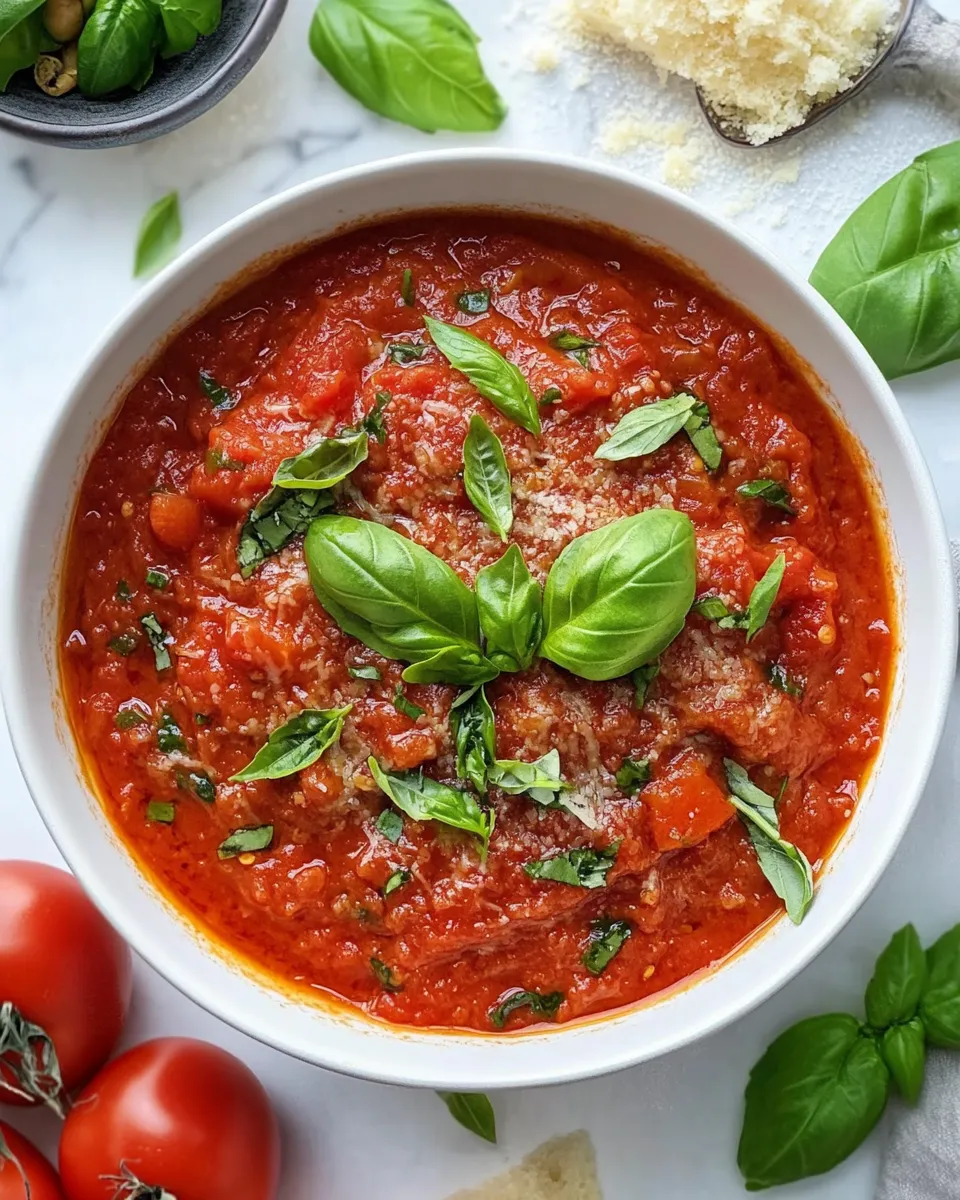
Homemade Marinara Sauce
Ingredients
Equipment
Method
- In your large pot or Dutch oven, heat the extra virgin olive oil over medium heat. Once hot, add the finely chopped yellow onions and sauté until they become translucent, about 5-7 minutes.
- Add the minced garlic to the pot and cook for about 1-2 minutes until fragrant, being careful not to let it burn.
- Pour in the San Marzano tomatoes (including their juices) into the pot. Use a wooden spoon to break up the tomatoes a bit.
- Add the butter and salt to the pot. Stir everything together until the butter melts and is incorporated into the sauce.
- Bring the sauce to a gentle simmer. Once simmering, add the fresh basil sprigs. Cover partially with a lid and let the sauce simmer for about 30-45 minutes, stirring occasionally.
- After simmering, taste the sauce and adjust the seasoning if needed. You might want to add more salt or even a pinch of sugar if the sauce is too acidic.
- Once you're satisfied with the flavor, remove the pot from heat. Discard the basil sprigs and serve the sauce warm over your favorite pasta.
Notes
- Store leftovers in an airtight container in the refrigerator for up to 5 days.
- Marinara sauce can be frozen for up to 3 months; thaw in the refrigerator overnight before reheating.
- Try adding red pepper flakes for a spicy kick!